
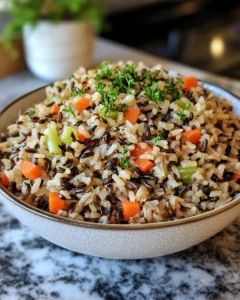
Few dishes capture the essence of a warm, comforting meal quite like a perfectly cooked wild rice pilaf. This dish is a celebration of textures and flavors—the nutty, earthy taste of wild rice paired with tender vegetables and aromatic herbs. It’s the kind of recipe that elevates a simple weeknight dinner into something special or complements a festive holiday table with elegance and charm.
Wild rice pilaf has long been a favorite in many households across North America, especially in regions where wild rice grows naturally. Traditionally enjoyed during fall and winter gatherings, this versatile dish brings both heartiness and sophistication to any meal. The inspiration for this recipe came from family dinners where everyone gathered around the table, savoring the nutty aroma and the comforting warmth of a dish that felt homemade yet refined.
Whether served alongside roasted meats, a hearty stew, or as a vegetarian main, wild rice pilaf is a dish that invites people to slow down, enjoy good company, and savor every bite. Its layers of flavor and appealing presentation make it a recipe you’ll want to share with friends, family, and guests alike.
Ingredients
-
1 cup wild rice, rinsed thoroughly
-
2 cups vegetable broth or chicken broth
-
1 medium onion, finely chopped
-
2 cloves garlic, minced
-
1 cup celery, diced
-
1 cup carrots, diced
-
1/2 cup mushrooms, sliced (optional)
-
1/2 cup slivered almonds or pecans, toasted
-
1/2 cup dried cranberries or raisins
-
3 tablespoons unsalted butter or olive oil
-
1 teaspoon fresh thyme, chopped (or 1/2 teaspoon dried thyme)
-
1 teaspoon fresh parsley, chopped (for garnish)
-
Salt and freshly ground black pepper, to taste
Directions
-
Prepare the Wild Rice:
Begin by rinsing the wild rice under cold running water. Drain thoroughly. This step helps remove excess starch and ensures the grains remain separate when cooked. -
Cook the Rice:
In a medium saucepan, bring 2 cups of vegetable or chicken broth to a boil. Add the rinsed wild rice, reduce the heat to low, cover, and simmer for 40–50 minutes or until the rice is tender and most of the liquid is absorbed. Remove from heat and let it stand, covered, for 5–10 minutes. Fluff with a fork before combining with other ingredients. -
Sauté the Vegetables:
While the rice is cooking, heat butter or olive oil in a large skillet over medium heat. Add the chopped onion, celery, and carrots. Sauté for 5–7 minutes until the vegetables are tender but still retain some bite. Add the garlic and mushrooms, if using, and cook for an additional 2–3 minutes. -
Combine Rice and Vegetables:
Gently fold the cooked wild rice into the skillet with the sautéed vegetables. Stir in the dried cranberries or raisins, toasted almonds or pecans, and thyme. Season with salt and freshly ground black pepper to taste. -
Heat Through and Serve:
Cook the pilaf over low heat for 3–5 minutes, stirring occasionally to allow the flavors to meld. Transfer to a serving dish and sprinkle with fresh parsley for a vibrant finishing touch. Serve warm alongside your favorite main dishes, or enjoy as a standalone vegetarian option.
Tips for the Perfect Wild Rice Pilaf
-
Rinsing the Rice: Always rinse wild rice before cooking to remove excess starch and prevent clumping.
-
Toasting Nuts: Toasting nuts enhances their flavor and adds a delightful crunch to the pilaf. Use a dry skillet over medium heat for 3–5 minutes, stirring frequently.
-
Flavor Variations: For added depth, try including sautéed bell peppers, zucchini, or a handful of spinach just before serving.
-
Make Ahead: Wild rice pilaf can be prepared a day in advance. Store it in an airtight container in the refrigerator and gently reheat with a splash of broth to prevent drying out.
-
Serving Suggestions: This pilaf pairs beautifully with roasted vegetables, baked tofu, chicken, or turkey. It also works well as a festive side for holiday dinners.
Why Wild Rice Pilaf Is a Must-Try
Wild rice pilaf is more than just a side dish—it’s a versatile, wholesome option that brings warmth, flavor, and nutrition to any meal. The nutty flavor of wild rice, combined with tender vegetables and sweet dried fruit, creates a perfect balance of savory and slightly sweet notes. The dish is naturally gluten-free and can easily be made vegetarian or vegan by using plant-based butter or oil and vegetable broth.
From a nutritional standpoint, wild rice is packed with fiber, antioxidants, and essential minerals such as magnesium, phosphorus, and zinc. By adding a medley of vegetables and nuts, this dish becomes a nutrient-dense complement to your dinner table, providing protein, vitamins, and healthy fats. For those who enjoy mindful eating, wild rice pilaf satisfies both flavor and health goals.
Common Variations of Wild Rice Pilaf
-
Mushroom and Herb Pilaf: Sauté a combination of wild mushrooms with fresh thyme and rosemary for an earthy flavor profile.
-
Cranberry and Orange Pilaf: Add dried cranberries and a splash of fresh orange juice or zest to create a festive and aromatic dish perfect for holidays.
-
Savory Nut Medley: Mix slivered almonds, pecans, and walnuts for a crunchy texture that complements the soft grains of rice.
-
Autumn Harvest Pilaf: Incorporate roasted butternut squash, sweet potatoes, or pumpkin puree for a warm, seasonal flavor.
-
Mediterranean Style: Stir in sun-dried tomatoes, olives, and fresh basil for a bright, Mediterranean-inspired twist.
Health Benefits of Wild Rice Pilaf
-
High in Fiber: Wild rice is rich in dietary fiber, promoting digestive health and keeping you full longer.
-
Rich in Antioxidants: The antioxidants in wild rice help protect cells and support overall wellness.
-
Low in Fat: This dish is naturally low in fat, making it a heart-healthy choice.
-
Plant-Based Options: By using vegetable broth and plant-based fats, wild rice pilaf can be enjoyed as a fully vegan and plant-forward meal.
-
Packed with Nutrients: Including a variety of vegetables boosts vitamins, minerals, and phytonutrients, making it a nutrient-dense side or main dish.
Presentation Tips
-
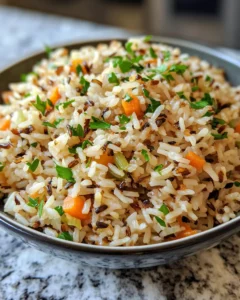
Serve in a Beautiful Bowl: A rustic ceramic or wooden bowl enhances the visual appeal.
-
Garnish with Fresh Herbs: Parsley, thyme, or even chives add a pop of color and fresh aroma.
-
Add Texture: Toasted nuts and dried fruits create a pleasing contrast with the soft rice and tender vegetables.
-
Layering Ingredients: For special occasions, consider layering the pilaf with roasted vegetables in a serving dish for a stunning presentation.
Pairing Suggestions
Wild rice pilaf pairs well with a variety of dishes:
-
Roasted or Grilled Meats: Chicken, turkey, or beef complement the nutty flavors of the rice.
-
Vegetarian Entrées: Serve alongside roasted vegetables, stuffed peppers, or a hearty lentil stew.
-
Salads: A crisp green salad with a light vinaigrette balances the richness of the pilaf.
-
Soups: A warm bowl of butternut squash or creamy tomato soup makes a comforting meal with wild rice pilaf on the side.
Why This Recipe Is Perfect for Any Occasion
Wild rice pilaf is an elegant yet simple dish that works for both everyday dinners and special celebrations. Its combination of textures, colors, and flavors makes it visually appealing and satisfying to eat. It’s a dish that invites creativity, allowing you to adjust vegetables, nuts, or dried fruits based on the season or your pantry.
Whether you’re hosting a holiday dinner, a family gathering, or simply looking to elevate a weeknight meal, this recipe provides a perfect balance of flavor, nutrition, and ease of preparation. Its versatility ensures it can be a star side dish or a comforting main course, making it a recipe you’ll return to time and time again.
Frequently Asked Questions
1. How long does wild rice pilaf keep in the fridge?
Wild rice pilaf can be stored in an airtight container in the refrigerator for up to 4–5 days. To reheat, place it in a skillet or microwave with a splash of broth or water to keep it moist. Avoid overcooking during reheating, as the rice may become mushy.
2. Can I freeze wild rice pilaf?
Yes, wild rice pilaf freezes very well. Allow the dish to cool completely, then transfer it to a freezer-safe container. It can be frozen for up to 2–3 months. To reheat, thaw overnight in the refrigerator and warm gently in a skillet or oven with a little added broth.
3. Can I make wild rice pilaf gluten-free?
Absolutely. Wild rice is naturally gluten-free, and by using gluten-free broth and ensuring that added ingredients like dried fruits or nuts are processed without gluten, you can enjoy this dish safely.
4. Can I prepare wild rice pilaf ahead of time for a holiday meal?
Yes, wild rice pilaf is a great make-ahead dish for holiday meals. You can prepare it the day before, store it in the refrigerator, and gently reheat it before serving. Consider toasting the nuts and adding fresh herbs just before serving to maintain flavor and texture.
Final Thoughts
Creating the perfect wild rice pilaf is about layering flavors and textures while using high-quality ingredients. From the nutty wild rice to the tender vegetables and sweet dried fruits, each bite tells a story of comfort and care. This dish is proof that simple ingredients, when combined thoughtfully, can create something extraordinary.
Take the time to toast your nuts, sauté your vegetables gently, and season with fresh herbs. The result is a dish that is as beautiful to look at as it is delightful to eat. Wild rice pilaf is more than just a side; it’s a celebration of flavor, tradition, and shared meals that bring people together.
Serve it at your next gathering or enjoy it as a cozy dinner at home—you’ll discover why wild rice pilaf remains a beloved classic. Once you try this recipe, it’s likely to become a staple in your cooking repertoire, offering endless opportunities for creativity and enjoyment.
Print
Wild Rice Pilaf Recipe
- Total Time: 65 minutes
- Yield: 4–6 servings 1x
Description
A warm, comforting wild rice pilaf is the perfect side dish for cozy family dinners or festive holiday gatherings. With its nutty wild rice, tender vegetables, and a hint of sweetness from dried fruit, this dish brings layers of flavor and texture to any table. Inspired by traditional North American recipes, this pilaf is versatile, wholesome, and elegant enough to serve alongside roasted meats or as a satisfying vegetarian main.
Ingredients
-
1 cup wild rice, rinsed thoroughly
-
2 cups vegetable broth or chicken broth
-
1 medium onion, finely chopped
-
2 cloves garlic, minced
-
1 cup celery, diced
-
1 cup carrots, diced
-
1/2 cup mushrooms, sliced (optional)
-
1/2 cup slivered almonds or pecans, toasted
-
1/2 cup dried cranberries or raisins
-
3 tablespoons unsalted butter or olive oil
-
1 teaspoon fresh thyme, chopped (or 1/2 teaspoon dried thyme)
-
1 teaspoon fresh parsley, chopped (for garnish)
-
Salt and freshly ground black pepper, to taste
Instructions
-
Rinse the wild rice under cold running water and drain thoroughly.
-
In a medium saucepan, bring 2 cups of broth to a boil. Add the wild rice, reduce heat to low, cover, and simmer for 40–50 minutes or until tender. Remove from heat and let stand, covered, for 5–10 minutes. Fluff with a fork.
-
While the rice cooks, heat butter or olive oil in a large skillet over medium heat. Add onion, celery, and carrots. Sauté for 5–7 minutes until tender but still crisp.
-
Add garlic and mushrooms, if using, and cook for 2–3 more minutes.
-
Fold the cooked wild rice into the skillet with the sautéed vegetables. Stir in dried cranberries or raisins, toasted nuts, and thyme. Season with salt and pepper to taste.
-
Cook over low heat for 3–5 minutes, stirring occasionally. Transfer to a serving dish and sprinkle with fresh parsley. Serve warm.
Notes
-
Rinse wild rice before cooking to prevent clumping.
-
Toast nuts in a dry skillet for 3–5 minutes to enhance flavor.
-
Make ahead: Store in the refrigerator for up to 5 days; reheat with a splash of broth.
-
Variations: Add bell peppers, zucchini, or spinach for extra flavor and color.
-
Pairs well with roasted meats, baked tofu, or as a vegetarian main dish.
- Prep Time: 15 minutes
- Cook Time: 50 minutes