
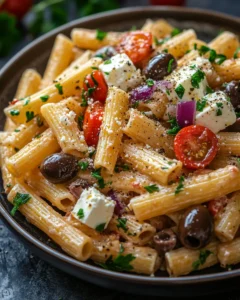
There are certain dishes that instantly transport you to another place, and this Zesty Greek Pasta with Feta and Olives does exactly that. It’s the kind of recipe that feels perfect for a relaxed summer lunch, a light yet satisfying dinner, or a colorful addition to a weekend gathering with friends and family. Imagine a sunlit table, a gentle breeze, and a bowl of pasta bursting with fresh flavors and vibrant colors.
The inspiration for this recipe comes from the timeless simplicity of Mediterranean cooking, particularly the way everyday ingredients are elevated through balance and freshness in Greece. This pasta brings together tangy feta, briny olives, juicy tomatoes, and a citrusy dressing that ties everything together beautifully. It’s a dish rooted in tradition yet flexible enough for modern kitchens, making it ideal for both seasoned cooks and beginners looking for something dependable, nourishing, and full of character.
Why You’ll Love This Greek-Inspired Pasta
This recipe stands out because it is uncomplicated while still delivering bold flavor. Every component plays a clear role: the pasta provides comfort and structure, the feta adds creaminess and tang, and the olives bring depth and savoriness. Fresh herbs and lemon brighten the dish, keeping it lively rather than heavy.
Another reason this pasta is so appealing is its versatility. It works equally well served warm or at room temperature, making it suitable for meal prep, picnics, or potluck-style meals. It also pairs beautifully with grilled vegetables or a simple green salad, allowing you to build a complete meal around it without much extra effort.
Ingredients Breakdown and Flavor Notes
Before cooking, it helps to understand how each ingredient contributes to the final dish. This ensures balance and helps you make smart substitutions if needed.
-
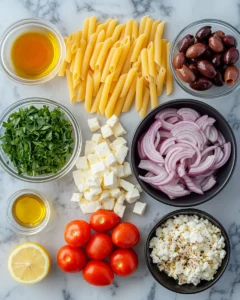
Pasta: Short shapes like penne, fusilli, or farfalle work best because they hold the dressing and mix-ins well.
Amount: 400 g (14 oz) -
Feta Cheese: Crumbled feta provides a creamy, salty contrast to the bright dressing.
Amount: 200 g (7 oz) -
Olives: Kalamata or black olives add brininess and depth.
Amount: 150 g (1 cup), pitted and sliced -
Cherry Tomatoes: These bring sweetness and juiciness.
Amount: 250 g (9 oz), halved -
Red Onion: Thinly sliced for a mild bite.
Amount: 1 small (about 80 g / 3 oz) -
Extra Virgin Olive Oil: The backbone of the dressing.
Amount: 80 ml (⅓ cup) -
Fresh Lemon Juice: Adds zest and brightness.
Amount: 45 ml (3 tablespoons) -
Garlic: Finely minced for aroma.
Amount: 2 cloves -
Dried Oregano: Classic Greek flavor.
Amount: 1½ teaspoons -
Fresh Parsley: For freshness and color.
Amount: 30 g (1 cup), chopped -
Salt and Black Pepper: To taste
Serving Suggestions and Pairings
This pasta can be served on its own or as part of a larger spread. It complements roasted vegetables, flatbreads, or a simple cucumber salad. For gatherings, it’s an excellent centerpiece dish that holds up well without reheating, making it practical as well as appealing.
Frequently Asked Questions
Can I make this Greek pasta ahead of time?
Yes, this recipe is well suited for preparing in advance, which is one of its biggest advantages. You can make the pasta up to a day ahead and store it in an airtight container in the refrigerator. The flavors actually improve as they sit, because the dressing has time to fully coat the pasta and vegetables. If making ahead, consider reserving a small portion of the feta and fresh parsley to add just before serving. This keeps the dish looking fresh and vibrant. If it seems a bit dry after chilling, a light drizzle of olive oil and a squeeze of lemon juice will quickly revive it.
What type of pasta works best for this recipe?
Short pasta shapes are ideal for this dish because they capture the dressing and small ingredients more effectively. Penne, fusilli, rotini, or farfalle are all excellent options. These shapes provide plenty of surface area for the lemony dressing and help distribute the feta and olives evenly throughout the dish. While long pasta like spaghetti can work, it doesn’t offer the same bite-sized balance of flavors. Whole wheat or gluten-free pasta can also be used, as long as it’s cooked just to al dente for the best texture.
How do I keep the pasta from becoming too salty?
Because feta and olives are naturally salty, it’s important to be mindful of seasoning. Start with minimal added salt in the dressing and adjust only after tasting the combined dish. You can also rinse olives briefly under cold water if they are particularly briny. Choosing a high-quality feta with balanced saltiness rather than an overly sharp variety also helps. Remember that the saltiness will intensify slightly as the pasta rests, so it’s best to season gradually rather than all at once.
Can I customize this recipe with additional vegetables?
Absolutely. This pasta is highly adaptable and welcomes additional vegetables. Cucumbers add crunch and freshness, roasted bell peppers bring sweetness, and lightly steamed green beans provide texture and color. When adding vegetables, keep the balance in mind so the dish remains light and cohesive. Avoid overcrowding the pasta with too many additions, and make sure everything is cut into similar-sized pieces for even distribution and a pleasant eating experience.
Tips for the Best Flavor and Texture
-
Cook pasta just until al dente to prevent it from becoming mushy.
-
Use fresh lemon juice rather than bottled for a brighter taste.
-
Allow the pasta to rest briefly before serving to enhance flavor cohesion.
-
Gently fold in feta to maintain its texture and visual appeal.
Final Thoughts
Zesty Greek Pasta with Feta and Olives is one of those recipes that proves simplicity can be deeply satisfying. It doesn’t rely on complicated techniques or hard-to-find ingredients, yet it delivers a dish that feels complete, thoughtful, and full of character. Each bite offers a balance of creamy, tangy, fresh, and savory notes that make it both comforting and refreshing at the same time.
What truly sets this pasta apart is its adaptability. It can be a quick weekday meal, a make-ahead lunch, or a crowd-pleasing dish for gatherings. It fits effortlessly into a variety of occasions without feeling repetitive or predictable. The ingredients are familiar, but the combination feels intentional and well-rounded, which is the hallmark of enduring recipes.
This dish also encourages mindful cooking. By focusing on quality ingredients and simple preparation, it reminds us that good food doesn’t need to be complicated to be memorable. Whether you’re cooking for yourself or sharing with others, this Greek-inspired pasta invites you to slow down, savor each element, and enjoy the process as much as the result. It’s a recipe worth returning to again and again.
Print
Zesty Greek Pasta with Feta and Olives
- Total Time: 25 minutes
- Yield: 4–6 servings
Description
A bright and refreshing pasta dish inspired by Mediterranean flavors, combining tangy feta, briny olives, and a zesty lemon dressing for an easy yet satisfying meal.
Ingredients
-
Pasta (penne or fusilli): 400 g (14 oz)
-
Feta cheese, crumbled: 200 g (7 oz)
-
Kalamata or black olives, pitted and sliced: 150 g (1 cup)
-
Cherry tomatoes, halved: 250 g (9 oz)
-
Red onion, thinly sliced: 1 small (80 g / 3 oz)
-
Extra virgin olive oil: 80 ml (⅓ cup)
-
Fresh lemon juice: 45 ml (3 tablespoons)
-
Garlic, minced: 2 cloves
-
Dried oregano: 1½ teaspoons
-
Fresh parsley, chopped: 30 g (1 cup)
-
Salt: to taste
-
Black pepper: to taste
Instructions
-
Cook the pasta in salted boiling water until al dente. Drain and let cool slightly.
-
In a small bowl, whisk together olive oil, lemon juice, garlic, oregano, salt, and pepper.
-
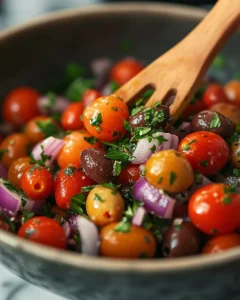
In a large bowl, combine tomatoes, olives, red onion, and parsley.
-
Add the pasta and toss gently.
-
Pour the dressing over the pasta and mix until evenly coated.
-
Fold in the feta cheese carefully.
-
Adjust seasoning and let rest for 10–15 minutes before serving.
Notes
-
This dish can be served warm or chilled.
-
Store leftovers in an airtight container in the refrigerator for up to 3 days.
-
Add extra lemon juice or olive oil before serving if needed.
- Prep Time: 15 minutes
- Cook Time: 10 minutes